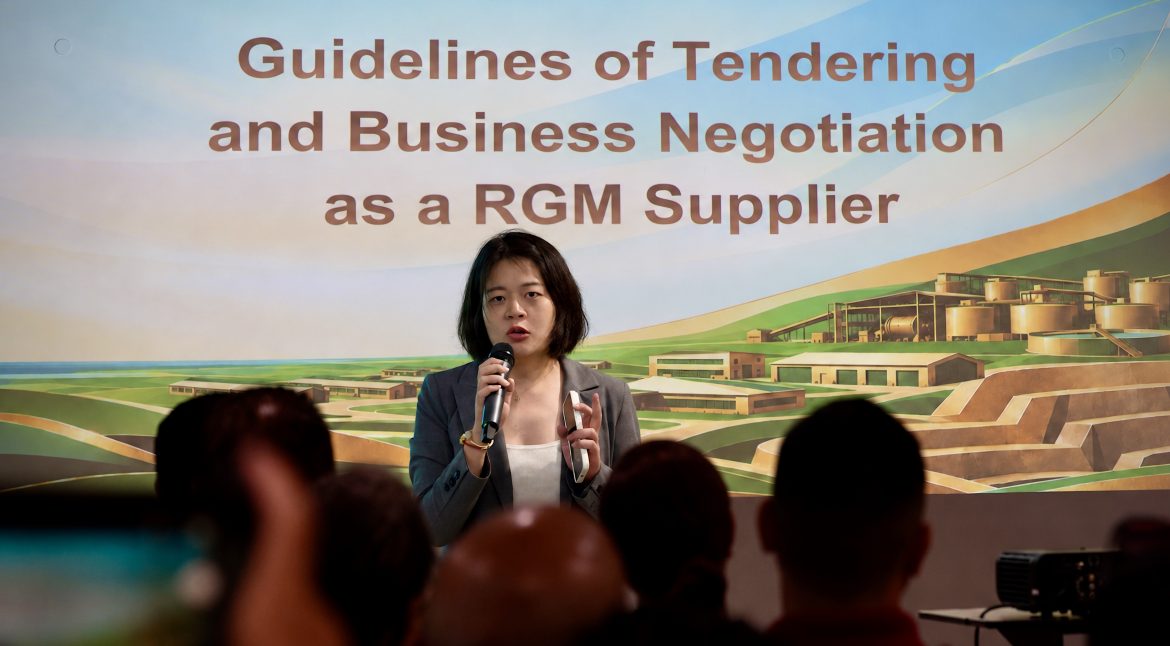
PARAMARIBO, Suriname, October 30, 2026 — Rosebel Gold Mines N.V. (RGM) held its Expansion Projects Briefing on Supplier Opportunities & Recruitment at Torarica Resort on Friday afternoon, bringing together 95 participants from 49 local companies.
Company representatives presented Rosebel’s development plans, the first phase of local supplier projects, workforce needs, and local talent development opportunities. The turnout reflected strong interest in the business and employment opportunities arising from the expansion.
Three Expansion Projects to Take Rosebel to New Heights
Rosebel is advancing three major projects: a new processing plant at Mayo, new mining and processing facilities at Saramacca, and a 90-megawatt heavy fuel oil power plant with supporting electricity infrastructure.
Once completed, the projects are expected to increase annual ore processing to approximately 24 million tonnes and annual gold production to 13.8 tonnes. These figures would set records for the operation and strengthen Rosebel’s position as one of South America’s leading gold mines.
The projects support Rosebel’s long-term vision of a world-class, green, smart and modern gold mine. They will also substantially improve accommodation, office space and supporting facilities for employees and contractors.
Six First-Phase Projects Open to Local Businesses
The six projects presented at the briefing have a combined estimated budget of US$30 million. They include the Camp David expansion, a central warehouse, and office and accommodation facilities at Saramacca; an RGM exploration office; site preparation for the second phase of the solar project; and the Camp C dormitory expansion.
The projects are at different stages of preparation, with the Camp David expansion already in the local public tender process.
Qualified Surinamese companies may also participate in Rosebel tenders open to international competition. These include opportunities related to the power plant, electricity transmission and substations, as well as selected civil works for the new processing plants. Final scopes, eligibility requirements and tender arrangements will be set out in the relevant tender documents.
During the question-and-answer session, participants asked about supplier feedback, project timelines, subcontracting, and joint bids. Rosebel’s Supply Chain representatives said companies may bid as a joint venture, provided they meet the applicable legal and documentation requirements and collectively demonstrate the qualifications and capacity to carry out the work. They explained that subcontracting is restrained because of the risks and responsibilities involved in project execution.
Further project and policy information will be published through Rosebel’s supply chain page, where businesses can also follow tender announcements.
Thousands of Jobs Planned for Construction and Long-Term Operations
At peak construction in 2027, construction and solar power contractors are expected to need more than 2,100 temporary workers. After the projects are completed, Rosebel and its contractors expect about 3,600 more long-term positions than in 2026.
By the end of the first quarter of 2027, construction contractors expect to need 830 people on site for management, equipment operation, civil construction, installation, and support services. Separately, the two new processing plants plan to bring on 239 people during the same period, including 207 direct RGM employees.
Jobseekers can view RGM vacancies, review position requirements and apply through the Rosebel careers page. Rosebel will also share information through its website and official Facebook page, including recruitment opportunities with contractors.
Strengthening Local Talent Development
Deputy HR Manager Angela de Abreu said some positions require skills and experience that take time to develop. Rosebel is working with contractors and plans to cooperate with educational institutions, training providers and other partners to help more Surinamese workers prepare for construction and operational opportunities.
The company’s approach includes on-the-job mentoring, practical learning and mining-related training for the wider community. Rosebel is also studying skills training and certification opportunities for selected occupations.
“Rosebel is part of Suriname, and our future is closely connected to the country’s future,” Sustainability Director Soetjipto Verkuijl said. “We are striving not only for greater production, but also for stronger local businesses, a more skilled workforce and lasting opportunities that can benefit Suriname sustainably for years to come.”